Even People Who Preach Clarity Feel Lost Sometimes

There are just so many choices.

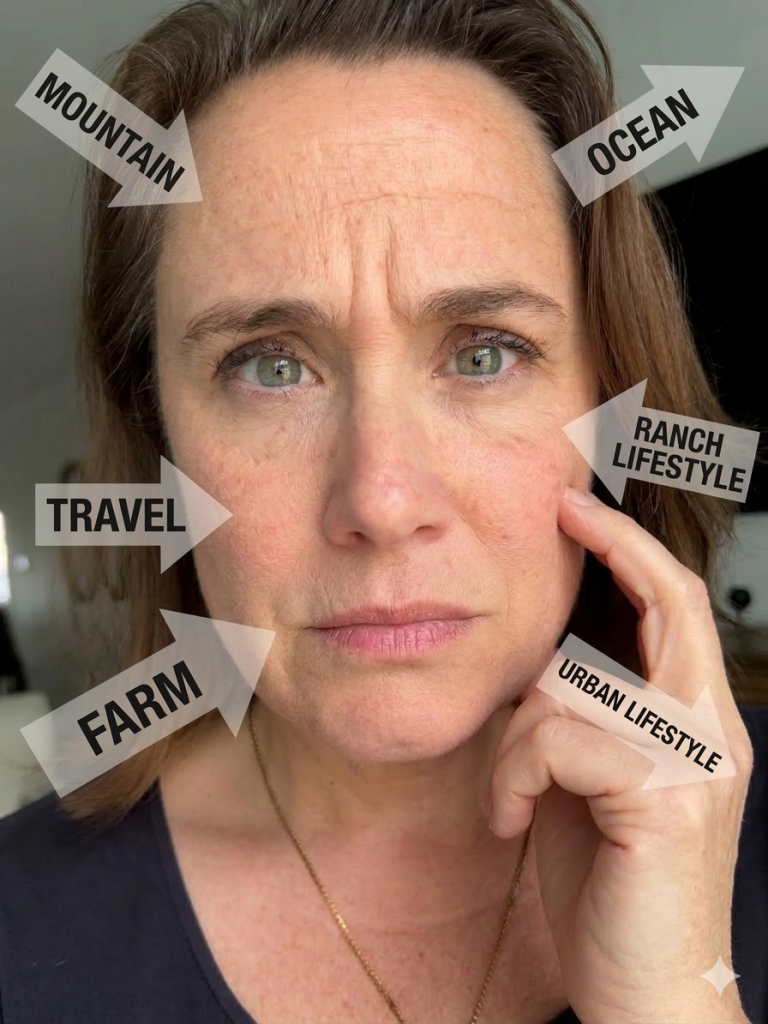
Do you want to live in the city and be able to walk everywhere, meeting new people every time you go out? Or do you long for acres of quiet where the only noise disturbance comes from the angry-sounding blue jays?

Do you want the ocean at your doorstep, or the mountains outside your window?

Do you want to be fit and have a Hollywood physique, or do you like to eat?

Do you want to tend a garden or travel the world?

The only answer I can definitively give is that I want acres and acres of property on the ocean that is in walking distance of a small town that has delicious restaurants that few people ever go to and that everyone knows me there but also stays out of my business and that every calorie-laden favorite I have is suddenly good for me and delicious with less calories than an asparagus spear.

Whew.

But alas, that option doesn’t appear to be available–at least not anywhere I’ve been so far.

Life is full of choices that often mean settling for one and discarding the other.

That’s why one of the best things you can do for yourself is to get clear about what you want.

Flotsam and Jetsam

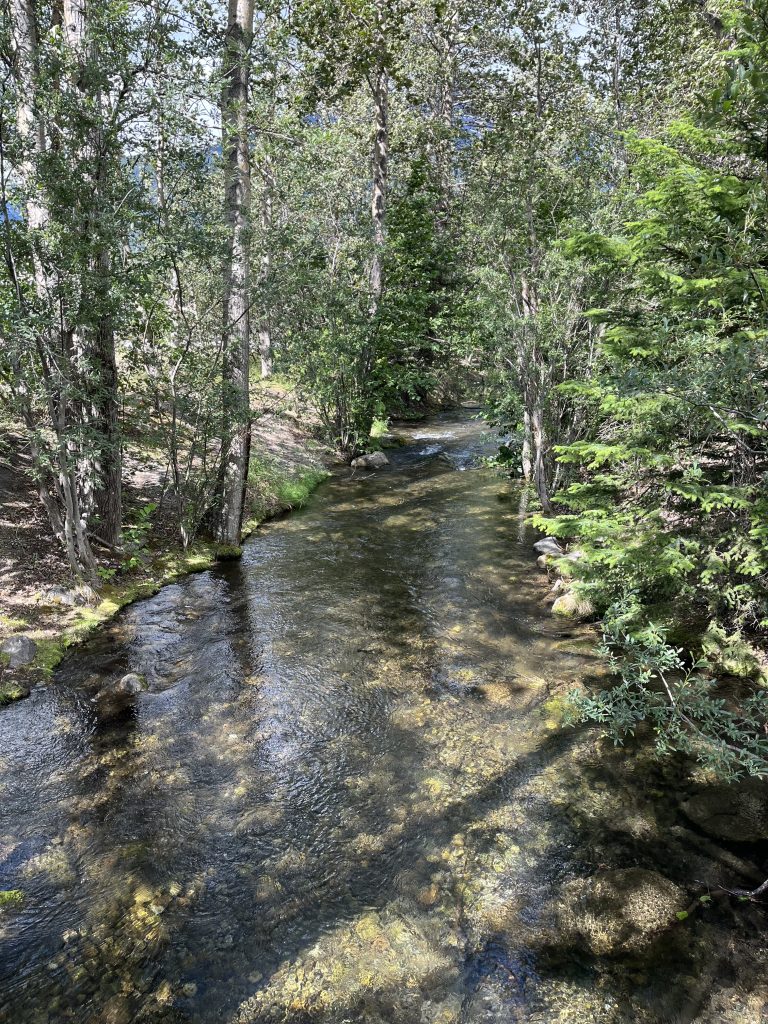
When I was a kid, I loved tossing sticks into streams and watching them navigate the current.

Some would right themselves and glide through rapids like they knew exactly where they were going. Others would get stuck in the muck almost immediately. What fascinated me was how often I was wrong. The ones I was sure would make it didn’t. The ones that looked doomed somehow kept floating long past where I could see them.

Those sticks were flotsam and jetsam. Just pieces of wood pushed wherever the current decided.

We’re not supposed to live that way.

We’re supposed to make decisions. Choose directions. Decide what kind of life we want to build instead of drifting wherever the current happens to take us.

At least that’s the theory, if you’re not a stick.

It’s All Been Done Before
This season, I feel a little like one of those sticks.

Part of it is that there are several new things happening in my life right now. Things I can’t fully control. For someone who likes to know where she’s going and what she’s having for dinner every night, that can feel unsettling.

Especially when I’m supposed to be writing a book about clarity for high achievers.

The rough draft is about seventy-five percent done. On paper, that should feel like progress. Instead, I’ve felt oddly adrift.

Part of the problem is that I’ve always liked finding a new path. A different way to get somewhere.

In school, I used to get frustrated during science experiments when the teacher already knew exactly how they would turn out. The entire scientific community knew how they would turn out. We were just repeating the steps.

I wanted to experiment with something that might surprise us all.

That same instinct has been following me around while writing this book. Since I started, I’ve seen at least four other people release books on a similar topic.

And I know what I would tell anyone else in this situation. I wrote about it in The Glinda Principle. The topic might be the same, but the voice and the story never are.

Still, there are moments when it makes me feel a little… dull. Like I’m just repeating an experiment where everyone already knows the result.

The Truth About Clarity

But the older I get, the more I realize something about clarity.

It isn’t permanent.

We talk about “figuring out what you want” as if it’s a destination. As if once you arrive there, the path stays paved forever.

It doesn’t.

Figuring out what you want is like landing a helicopter on a moving boat.

Sometimes the landscape shifts. Circumstances change. New questions appear that you didn’t know to ask before.

And suddenly the person who usually has a plan finds herself standing in the water again, watching a few sticks float past and wondering which direction the current is actually going.

The difference is this.

When I was a kid, those sticks had no say in where they ended up.

We do.

Even in seasons when things feel uncertain, we still get to decide whether we’re drifting or steering.

Right now, I may not know every turn ahead.

But I do know this.

I’m not flotsam.

And neither are you.

Sometimes the most important thing isn’t knowing exactly where you’re going.

It’s remembering that you still get to steer.
Middle Age Math

middle age math

Memoir does two things at once. It helps someone survive something. And it helps someone else understand it. But more than that, memoir reminds us that we are all moving through the same cycle—just at different points in it.

Thirty-five years ago yesterday, my father died. He was 67. I was 18.

I wasn’t prepared to lose a parent.

And neither were my friends.

They supported me with the familiar, well-meaning: “Let me know what I can do.”

But we were 18.

Some of us hadn’t even lost a pet yet.

They didn’t know what to say. They felt awkward. My sadness interrupted the narrow, self-focused existence most of us were living during freshman year—and that’s exactly how it should be at 18.

We thought our parents were old—but also somehow permanent. Mortality was abstract. Something that happened later. So we didn’t talk about it much.

Now I’m older. Many of my peers have lost a parent. Some have lost both.


The Season We Once Stood Outside of Has Become Our Own

Lately, I’ve been thinking about my place in that lifecycle.

Parent. Child. Possibly soon, grandparent.

The thought makes me smile. It also makes me shift in my seat.

Imposter syndrome doesn’t disappear with age, it just takes on a different nuance, a new role to play. You’re no longer the carefree young kid. You’re in charge of people and you wonder who in the world thought giving you that level of responsibility was a good thing.

When you’re young, you don’t really think you’re going to get old. And then you get there in a hot thirty seconds. And when you do, you can’t imagine who launched you into this place where you should know what to do and say only the right things.

It’s taxing being in charge of people where only last weekend it feels like you were at a frat party getting free drink tickets because you flipped your hair in the right direction.


The Math Changes

One minute you’re trying to decide what you want to do when you grow up.

The next minute people expect you to know—because you already are grown up (at least according to the IRS).

Aging changes how the world sees you.

When you’re young, people assume you’re not ready yet.

When you’re older, they begin wondering whether you still are.

You start to notice subtle considerations like the quiet calculations you make before walking the dog in the rain. In the awareness of uneven sidewalks. In the passing thought that a fall might mean a different level of injury now than it once did.

When someone mentions the year 2000, I instinctively think, not that long ago.

And then I count.

Twenty-six years.


You Understand It Later

Someone my age might read this and nod.

Someone who is 25 might roll their eyes.

I would have.

I read an interview with Bruce Willis where he said at 40, “I feel like a 25-year-old kid in my heart.” Until he looked in the mirror.

At the time, I thought it was funny, maybe slightly delusional on his part

Now I understand. Perspective doesn’t just change how we see people. It changes how we see stories. I read literature differently now than I did in my twenties. Things hit me that I didn’t notice or understand before. When I read the short story “The Swimmer” by John Cheever, I didn’t understand his progression through his neighbors’ pools. It seemed like Cheever had indulged in his favorite vice a little too long before picking up the pen that day. But now I know that life really does fly by with the brevity of your best summer.


Meaning Comes After

Memoir meets people where they are in the lifecycle. It helps someone living through a season feel understood. It also helps someone approaching that season feel prepared. And it helps someone long past it remember who they once were.

Your story stops being a collection of events.

It becomes meaning.

And meaning is what endures.

If you’ve found yourself revisiting old memories differently lately—seeing them with new perspective—you may already be closer to writing your story than you think.

When you’re ready to explore it, you don’t have to do that alone.

.

Your Story Might Be Someone Else’s Escape Route

Every time the lottery grows to multi millions, most people play the entertaining game of “what would you do with the money?”

Paying off a home or buying one, cars, vacation villas, jewelry, designer clothes…there are a million ways to unburden yourself of your newfound winnings and each of us has our own ideas of how we’d do it. (Although, paying off a mortgage or buying a home is the number one way most Americans confess they’d spend their money).

And I’m not any different. I’d pay off the house.

Maybe take a vacation. Definitely would pay for the boys’ college and pay off the small remainder of my car loan.

But my extravagance, if I was one of those billionaire winners, after I covered all the things that add stress to life, is something more outlandish.

My own private island?

Hardly.

How I Would Spend My Lottery Billions

I would make a list of all the things I have ever wanted to do or experience, but because I chose another path in life, I never did.

I’m not talking about buying a Ferrari. That was never something I saw myself doing.

I mean things like moving to Maine and becoming a lobster (or is it lobsta?) fisherman.

Exciting things that could’ve been. Lives I could’ve lead. Very “Midnight Library.” (Love that book’s concept.)

Then I would take that list, find people who are currently doing those things, and pay them to show me their world. And I could experience all of those things–if just for a week. <Sigh.>

That’s why I love memoir.

Before I discovered its beauty, I thought memoirs were trashy tell-all books that celebrities paid others to write.

Now, I know better.

A beautifully written memoir can help you do as George R.R. Martin said,

I have lived a thousand lives and I’ve loved a thousand loves. I’ve walked on distant worlds and seen the end of time. Because I read.”

I’ve read memoirs about lobster and crab fishermen, addicts, a twenty-something with a terminal illness, a funeral director, a homesteader, someone who walked the Pacific Coast Trail (and another who walked the Camino de Santiago), a trekker to Mt. Everest, a girl trapped in an attic, and countless memoirs of people trying to find themselves among awe-inspiring settings.

With some memoirs I came away wanting to switch places with the author, while others I gave thanks that I wasn’t in their position.

But all of their stories made me appreciate their experiences.

Reading builds empathy and no genre builds it quite the some way memoir does. After spending several hundred pages with an author, how can you not feel something for them?

Many people tell me they want to tell their story but few follow through. Much of that is because they wonder if their story is worth telling. I assure you someone is waiting to live life the way you have or to learn something from the challenges you’ve experienced.

While your perspective may be unique, your story is about connection, and helping people see things through your lens. By doing so, you help people not feel so alone. And that is an incredible service.

Until I am able to find a way to live a thousand lives of my own, I will escape into the adventure of memoir.

I hope you will too.


If you have a story to share, but don’t have the time to do it, contact me today. We’ll see if we have a compatible view on the project and a mutual respect of venturing into the unknown.

Until then, keep living.

The Only Gift You Need (but you have to be the one to give it)

Amidst all the hustle and craziness of this time of year, the Ghost of Christmas Past lingers close in my mind.

During those few stolen moments early in the morning before the sun rises and the slumberers awaken, and the cracking fire is my only companion, my mind often wanders to where I am this year compared to last. I reminisce about who is no longer in my life, what challenges I’ve faced this year that wasn’t apparent last, and think about who has entered my life.

It’s not morbid.

It’s my way of telling myself that the only constant is change.

This year, we sold a house in a state where I had spent two decades raising my children. We moved 1,000 miles away to a new time zone. There I met dozens of people—several of whom I now call friends. Our youngest kids went to college—one in the state where he was born and one in the state I spent my youth, each 1,000 miles away from where I am now.

We’ve spent more time with family who had previously been far away. We traded our flip-flops for cowboy boots. Yes, we’re those people.

I ghostwrote a book with a double transplant survivor about the importance of keeping a great attitude. And I’m talking to other people who want to tell their stories.

I walk more than I drive these days.

We visited my brother in Hawaii, I saw my son win a dance contest with his fraternity, I took my other son on a two-day road trip to school. I was there when my mother celebrated her 90th birthday.

I’ve embraced AI as a necessary part of doing effective work, even if it will probably replace me. And I’ve explained how to best use large language models on a few webinars.

I won an award from the Florida Authors & Publishers Association for my book The Glinda Principle but couldn’t attend the awards banquet because our house sold much quicker than expected and I was in mid route to a new life when my author peers were walking across the stage.

We glamped in Wimberley, Texas; attended our new hometown’s Oktoberfest; shopped for wedding dresses with our soon-to-be daughter-in-law; and raced to Pittsburgh thinking our youngest was experiencing appendicitis.

Life is certainly different than this time last year when I didn’t realize half of what was in store.

But there are still things I’m working on—carryovers, residuals, the same things in many respects. I still carry more weight than I should and eat more sugar than is healthy. And I haven’t booked as many speaking gigs as I had on my 2025 goal sheet.

Yet each day brings new opportunities and choices. There are things I saw going one way, that ended up another, and there were occurrences that I didn’t see happening at all, yet they did.

Redirection

But before you see this list as self-indulgent, depressing, or boastful, this look back is necessary. It’s important to understand where you’ve been to appreciate the potential in where you’re headed.

It may seem impossible for you this time of year to give a lot of thought to how things have changed. But it’s all part of your story.

And it’s only in the rearview that we can appreciate how rejection was just redirection.

On our way to Texas this year, we were buzzing along at a good clip. The weather was great and the golden hour cast a beautiful glow that made even the eighteen-wheelers look majestic. I was following my husband but he’s a more aggressive driver so he was about a quarter mile ahead of me.

Then I lost him. A few big rigs, some tall-profile SUVs, and several s-curves hid him from view. Then my GPS rerouted me. I assumed it had done the same for him and that was why I couldn’t see him. I had seconds to decide if I was going to exit the highway or continue on.

I went with the redirection.

Moments after exiting the highway, I was convinced the GPS wanted me lost in the tall grass of Mississippi backroads. There were twists and turns and one-lane bridges. How could this be the most efficient way to get to where I was going? Cell service was in and out like a twenty-something friend with benefits. The East Coaster in me broke out into a sweat.

Lost. Hopelessly lost. Sure, I followed the directions, but with fading cell service, it was only a matter of time before I had no guidance. Then I’d be trapped among the hills and hollows–a warning for women traveling. I cursed my GPS for being dumb. This was all its fault.

I realized then without a paper (or downloaded) map in the car, I was no longer in control. I had to hope my cell signal would hold until I could see the highway again or at least get out of the rural area and find a gas station oasis (preferably Buc-ee’s).

That’s when I noticed how enchanting the fading sunlight looked on the golden grasses, how the rust on the roof of a long abandoned cabin appeared to be purposefully done to offset the dismal gray color of the building, how horses are majestic beasts with gorgeous curves and tails that swish rhythmically.

I stopped worrying about what was next and concentrated on where I was. After all, there might be a chance I’d need to park my car in that golden grass and wait out the night if I couldn’t figure it out soon.

But I tamped the fear down and opened my eyes to what was all around me. The bucolic landscape of impossibly green hills and golden accents wasn’t anything like the sterile views I had seen from the highway and yet the road that took me to this peaceful place was only a few hundred feet away.

I was seeing the real Mississippi, not the man-created one but the natural one. Untouched. Less traveled. Vibrant in its simplicity. (Still, I was happy to have a full gas tank.)

Then I saw the sign to reenter the highway. When I did, cell service improved, and the views became more predictable—billboards, parts of exploded tires, fast-food wrappers.

I called my husband. He was stuck in traffic on the highway miles behind me. There had been an accident after he passed my turnoff. My concern over the time I had lost from my detour evaporated. I was thankful I had seen what I had. Undisturbed beauty and open roads.

It made no sense to me while I was in it, but my redirection had given me an experience my husband hadn’t had.

The Gift of Retrospect

We don’t always know why the plot twists of our lives happen. Perhaps they’re making way for something bigger and better or maybe, in my case, just giving you a better view.

And regrets aren’t worth your time because we can only base our decisions on the information we have at that moment. My husband hadn’t had my choice to exit and I hadn’t known why it was suggested I should.

We can only do what is best for us at that time with the tools and skills we have.

With any luck you’re not the same person reading this today as you were this time last year. You’ve learned something. You have overcome (or are working on that) and life has thrown you some curveballs.

But we learn from life in two ways—experience (having lived it) and learning from someone else by either hearing, reading, or watching their story.

So, during the holidays, give yourself the gift of reflection because when you open it, you’ll also likely receive the gift of appreciation. Be gentle with yourself and notice not what you didn’t accomplish but what you weathered and endured. Don’t look for only big wins; look for the strength it took to keep going some days whether you were battling fatigue or something bigger than that.

A new year is just around the corner, but before you spend time thinking about how you will try to change yourself for the better, appreciate the person you are today.

And think about the message you might have to share with others.


Don’t let another year go by without sharing your story with the world. If you don’t know where to start, start small. Think about:

  • What moment changed you?
  • What did it cost you to learn?
  • What do you know now that would help someone else?

If you have a story you’ve been carrying, I’m here to help you translate it into words that resonate.

Contact me today.