The Only Gift You Need (but you have to be the one to give it)

Amidst all the hustle and craziness of this time of year, the Ghost of Christmas Past lingers close in my mind.

During those few stolen moments early in the morning before the sun rises and the slumberers awaken, and the cracking fire is my only companion, my mind often wanders to where I am this year compared to last. I reminisce about who is no longer in my life, what challenges I’ve faced this year that wasn’t apparent last, and think about who has entered my life.

It’s not morbid.

It’s my way of telling myself that the only constant is change.

This year, we sold a house in a state where I had spent two decades raising my children. We moved 1,000 miles away to a new time zone. There I met dozens of people—several of whom I now call friends. Our youngest kids went to college—one in the state where he was born and one in the state I spent my youth, each 1,000 miles away from where I am now.

We’ve spent more time with family who had previously been far away. We traded our flip-flops for cowboy boots. Yes, we’re those people.

I ghostwrote a book with a double transplant survivor about the importance of keeping a great attitude. And I’m talking to other people who want to tell their stories.

I walk more than I drive these days.

We visited my brother in Hawaii, I saw my son win a dance contest with his fraternity, I took my other son on a two-day road trip to school. I was there when my mother celebrated her 90th birthday.

I’ve embraced AI as a necessary part of doing effective work, even if it will probably replace me. And I’ve explained how to best use large language models on a few webinars.

I won an award from the Florida Authors & Publishers Association for my book The Glinda Principle but couldn’t attend the awards banquet because our house sold much quicker than expected and I was in mid route to a new life when my author peers were walking across the stage.

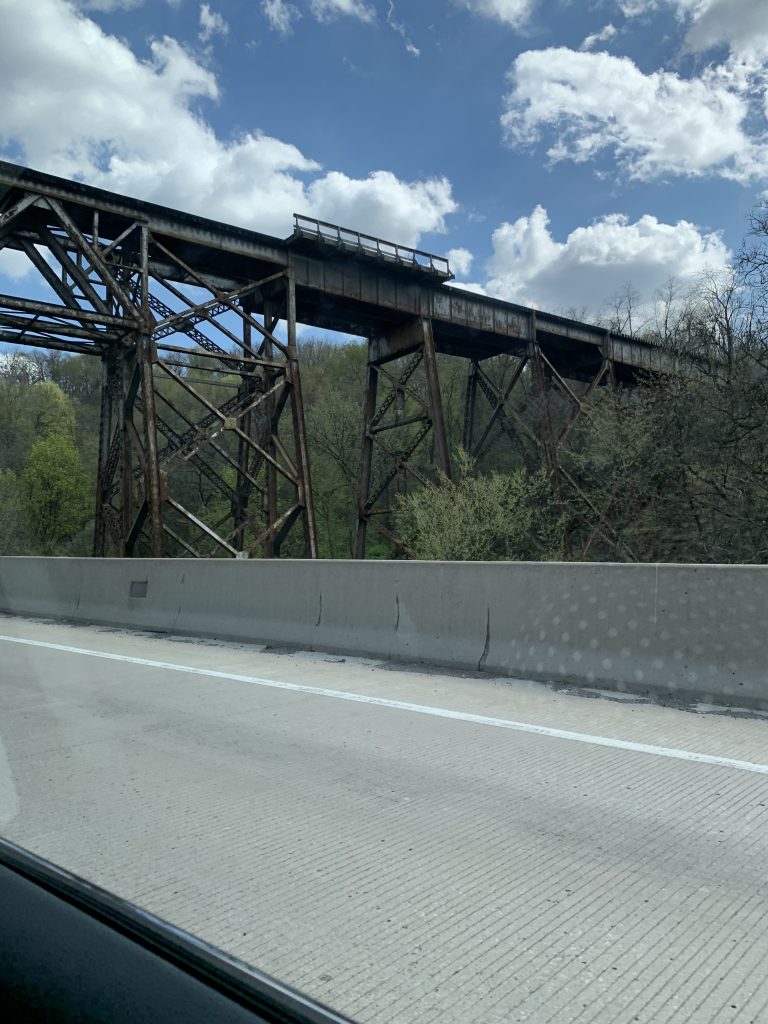
We glamped in Wimberley, Texas; attended our new hometown’s Oktoberfest; shopped for wedding dresses with our soon-to-be daughter-in-law; and raced to Pittsburgh thinking our youngest was experiencing appendicitis.

Life is certainly different than this time last year when I didn’t realize half of what was in store.

But there are still things I’m working on—carryovers, residuals, the same things in many respects. I still carry more weight than I should and eat more sugar than is healthy. And I haven’t booked as many speaking gigs as I had on my 2025 goal sheet.

Yet each day brings new opportunities and choices. There are things I saw going one way, that ended up another, and there were occurrences that I didn’t see happening at all, yet they did.

Redirection

But before you see this list as self-indulgent, depressing, or boastful, this look back is necessary. It’s important to understand where you’ve been to appreciate the potential in where you’re headed.

It may seem impossible for you this time of year to give a lot of thought to how things have changed. But it’s all part of your story.

And it’s only in the rearview that we can appreciate how rejection was just redirection.

On our way to Texas this year, we were buzzing along at a good clip. The weather was great and the golden hour cast a beautiful glow that made even the eighteen-wheelers look majestic. I was following my husband but he’s a more aggressive driver so he was about a quarter mile ahead of me.

Then I lost him. A few big rigs, some tall-profile SUVs, and several s-curves hid him from view. Then my GPS rerouted me. I assumed it had done the same for him and that was why I couldn’t see him. I had seconds to decide if I was going to exit the highway or continue on.

I went with the redirection.

Moments after exiting the highway, I was convinced the GPS wanted me lost in the tall grass of Mississippi backroads. There were twists and turns and one-lane bridges. How could this be the most efficient way to get to where I was going? Cell service was in and out like a twenty-something friend with benefits. The East Coaster in me broke out into a sweat.

Lost. Hopelessly lost. Sure, I followed the directions, but with fading cell service, it was only a matter of time before I had no guidance. Then I’d be trapped among the hills and hollows–a warning for women traveling. I cursed my GPS for being dumb. This was all its fault.

I realized then without a paper (or downloaded) map in the car, I was no longer in control. I had to hope my cell signal would hold until I could see the highway again or at least get out of the rural area and find a gas station oasis (preferably Buc-ee’s).

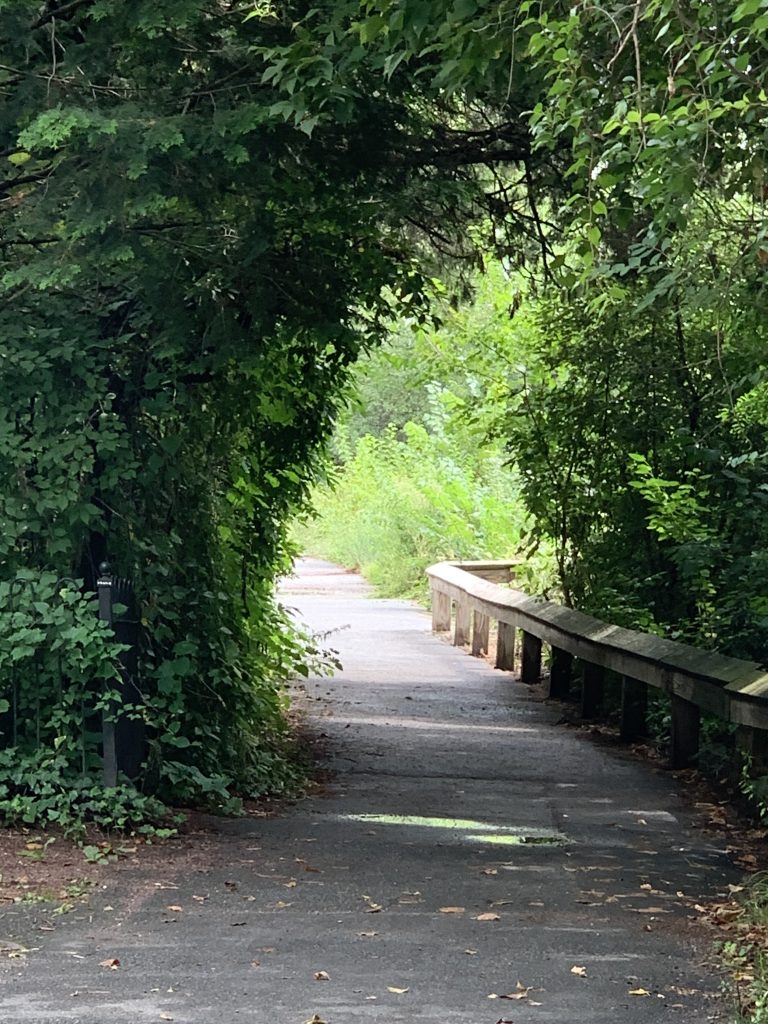
That’s when I noticed how enchanting the fading sunlight looked on the golden grasses, how the rust on the roof of a long abandoned cabin appeared to be purposefully done to offset the dismal gray color of the building, how horses are majestic beasts with gorgeous curves and tails that swish rhythmically.

I stopped worrying about what was next and concentrated on where I was. After all, there might be a chance I’d need to park my car in that golden grass and wait out the night if I couldn’t figure it out soon.

But I tamped the fear down and opened my eyes to what was all around me. The bucolic landscape of impossibly green hills and golden accents wasn’t anything like the sterile views I had seen from the highway and yet the road that took me to this peaceful place was only a few hundred feet away.

I was seeing the real Mississippi, not the man-created one but the natural one. Untouched. Less traveled. Vibrant in its simplicity. (Still, I was happy to have a full gas tank.)

Then I saw the sign to reenter the highway. When I did, cell service improved, and the views became more predictable—billboards, parts of exploded tires, fast-food wrappers.

I called my husband. He was stuck in traffic on the highway miles behind me. There had been an accident after he passed my turnoff. My concern over the time I had lost from my detour evaporated. I was thankful I had seen what I had. Undisturbed beauty and open roads.

It made no sense to me while I was in it, but my redirection had given me an experience my husband hadn’t had.

The Gift of Retrospect

We don’t always know why the plot twists of our lives happen. Perhaps they’re making way for something bigger and better or maybe, in my case, just giving you a better view.

And regrets aren’t worth your time because we can only base our decisions on the information we have at that moment. My husband hadn’t had my choice to exit and I hadn’t known why it was suggested I should.

We can only do what is best for us at that time with the tools and skills we have.

With any luck you’re not the same person reading this today as you were this time last year. You’ve learned something. You have overcome (or are working on that) and life has thrown you some curveballs.

But we learn from life in two ways—experience (having lived it) and learning from someone else by either hearing, reading, or watching their story.

So, during the holidays, give yourself the gift of reflection because when you open it, you’ll also likely receive the gift of appreciation. Be gentle with yourself and notice not what you didn’t accomplish but what you weathered and endured. Don’t look for only big wins; look for the strength it took to keep going some days whether you were battling fatigue or something bigger than that.

A new year is just around the corner, but before you spend time thinking about how you will try to change yourself for the better, appreciate the person you are today.

And think about the message you might have to share with others.


Don’t let another year go by without sharing your story with the world. If you don’t know where to start, start small. Think about:

  • What moment changed you?
  • What did it cost you to learn?
  • What do you know now that would help someone else?

If you have a story you’ve been carrying, I’m here to help you translate it into words that resonate.

Contact me today.

If You Don’t Tell Your Story Who Will?

Everyone tells you that you should write a book. But something’s holding you back. Let’s walk through the ten most common reasons you’re not on shelves yet. And it’s not talent.


Do you hear it?

For some people, the phrase shows up like clockwork.

At conferences.

At dinner parties.

When having wine with friends.

“You should write a book.”

If you’ve heard it more than once, there’s a reason. People don’t hand out that sentence casually. It’s usually because they see something in you — wisdom, perspective, survival, humor, or leadership — that deserves a permanent home on the page.

But if something’s been nudging you to write… and something else has been stopping you… you’re not alone.

I’ve even been there and I’m a professional.

Here are the 10 most common roadblocks I see when working with leaders, founders, and survivors who’ve carried a book inside them for years.


1. You Think Your Story Isn’t “big enough.”

It’s rarely about the size of the events. It’s about the meaning behind them.

Impact comes from honesty, not spectacle. You don’t have to have experienced something extraordinary. Your coping or leadership in ordinary circumstances can still inspire. After all, there are more of us grappling with common struggles than the blockbuster “astroid hitting the earth” scenarios.

2. You Don’t Know Where to Start.

Beginnings feel intimidating because most people confuse “start writing” with “start perfectly.”

Books begin in conversation, curiosity, and messy notes — not chapter one. When I made the switch from fiction to non-fiction with my book The Glinda Principle, I kept notes for months–little ideas I jotted down, not sure where I was going. I just knew I had something to say. Maybe a book, maybe an essay.

After a few weeks, I couldn’t believe how many thoughts had percolated into my notebook. The book practically wrote itself at the point.

But what it didn’t’t do was edit itself. (This is where you’ll spend most of your time so don’t worry about where to start. Just start.)

3. You’re Afraid of Being Misunderstood.

Sharing your story isn’t just an act of communication; it’s an act of courage.

You want control over the message, and that’s valid.

Plus, once you put it in writing, it feels permanent. This makes a lot of people step back and wonder what they’re saying and who they’re saying it about.

This is your truth. Write it first. Worry about those details afterward. Same goes for the next one…

4. You’re Worried About Hurting Someone.

Memoirs and leadership books often touch relationships, conflict, and truth.

There are ways to tell the story with integrity and kindness. You can also create amalgams of characters so no one person feels wronged by the portrayal.

But again, tell your story first, the concern about liable and feelings can come later during editing.

5. You Don’t Think You’re a Writer.

Well, you’re not…yet.

And you don’t have to be. Writing is a craft, but storytelling is human instinct.

If you speak in a truthful way that helps connect people to your experiences and how it relates to their own, you’re already a quarter of the way there. We just have to “capture it” at that point.

6. You’re Overwhelmed by the Publishing World.

Traditional? Hybrid? Self-publishing? Agents? Proposals?

It feels like learning an entirely new language before you even know what you want to say. But worrying about that before you’ve ever written a word is like being concerned about how you’ll transport a cake to an upcoming event when you don’t even have an oven to bake it in.

7. You’ve Tried Before… and Stalled.

Half-written drafts are not failures. They’re proof you cared enough to start.

Screenshot

A stalled draft usually means you didn’t have a structure — not that you didn’t have a story.

And, maybe, just maybe it wasn’t the right time for the world to hear your message.

8. You Don’t Know Who Your Reader Is.

This is the one I give my clients the hardest time about. We all want to believe our stories are for everyone.

But they’re not. At least not initially.

There is someone who wants (and needs) to hear your. Who is that person? How old are they? What’s their background? Where do they hang out online and in-person? When you can figure those things out, you can write with that person in mind.

Once you do that, it’s impossible not to finish because you don’t want to let that person down.

Clarity about your audience also sets everything up including voice, shape, pacing, purpose.

9. You’re Scared Your Experience Will Be Judged.

Anyone who has lived deeply carries stories with sharp edges.

The goal isn’t to impress — it’s to resonate. Readers connect to truth, not polish. Perfectionism has killed more writing careers than the pen (or keyboard) of a spiteful critic.

Plus, you’re not for everyone.

In fact, there are people who hate chocolate. And although they are wrong and very ill, they are entitled to their opinion.

If chocolate can’t make everyone happy, neither can you and that’s okay.

10. You Don’t Have the Time.

Here’s the part most people don’t realize:

Many of the world’s most meaningful books were not written by the person whose name is on the cover.

They were shaped, structured, and carried to completion with a ghostwriter or–at the very least–a capable editor.

Most of us don’t have a year to carve out to learn the publishing industry, and become a full-time writer. I wrote one of my books for an hour a day in my car on my lunch hour.

You can chip away at the goal of becoming an author the same way I did in stolen moments around a full-time job and a family or you can partner who a ghostwriter who can help you turn experience into narrative and narrative into impact full-time. The first way (doing it part-time on your own) might take a year or longer depending on your schedule.

Do you want your story to wait that long? Do you want your audience to?

Just because you don’t have the time doesn’t mean the world doesn’t need your message.

If you’re one of the many people who keep hearing “You should write a book” and feel a quiet yes beneath the fear and logistics — let’s talk.

Sometimes the first step isn’t writing. It’s a conversation.


We’re in the Company of Our Ancestors

I’m writing this post on Thanksgiving Day from Kauai, Hawaii. I’ve been here for two days but still have to double-check the spelling every time I key it. Using that many vowels doesn’t come naturally for me.

The resort I’m staying in is a slice of paradise–much as you would expect. I have yet to see an ugly part of this island that is referred to as the “Garden Island” for its lush greenery. Even if you haven’t visited, you’ve likely seen it in movies like Jurassic Park or the opening waterfall scene of the cult classic TV show Fantasy Island (the original, not these try-hard remakes).

Within a stone’s through of my balcony is a dense clump of tropical beauty, a tangle of bougainvillea, feathery evergreens, sea plums, and the like. It gives visual interest to the rolling green expanse and the ribbon of winding concrete trails through the resort.

But the most interesting thing about the plant clusters are the signs erected in front of them.

It struck me as both surprising and strangely grounding. In places like Florida, development often means quietly relocating human remains. Here, the resort was built around them.

Maybe it’s not what we’d call a peaceful resting place, but what can you do when the living and the dead want an ocean view?

I’m not making light of it. If anything, it reminded me how often we live in the shadows — or the company — of those who came before us. Our ancestors shape more of who we are than we tend to acknowledge. Some traits are rooted in DNA, not upbringing. Whether you lean introverted or extroverted, for example, has more to do with inheritance than environment.

James Clear referenced several of these patterns in Atomic Habits, and many surprised me:

  • How many hours you tend to spend watching television
  • Your likelihood to marry or divorce
  • Your tendency to get addicted to drugs, alcohol, or nicotine
  • How obedient or rebellious you are when facing authority
  • How vulnerable or resistant you are to stressful events
  • How proactive or reactive you tend to be
  • How captivated or bored you feel during sensory experiences (like attending a concert)

And then there are the parts shaped by nurture: what we value, what we fear, what we define as success. These influences don’t control us, but they do set a frame — a kind of narrative scaffolding — we either accept or work hard to dismantle.

Which is why, when we tell our own story, we’re also telling the story of our ancestors. Their decisions, struggles, triumphs, and limitations course through us.

They show up in our choices, our emotional reflexes, and the biases we carry into adulthood.

Most of us don’t live on land where our ancestors are buried. But they’re present nonetheless.

They are the hidden ingredients in what it was that made us. They are the herbs you can’t quite taste but differentiates our recipe from another.

Bringing that awareness into a memoir or book can be the difference between a good story and a great one. When we work together, part of our process is uncovering those quiet influences — the inherited threads that shape the arc of a life.

If you’re ready to explore the deeper layers of your story, I’d be honored to help you shape them into something lasting.

Book some time today and we can talk about it.

Aloha.

How to Turn a Big Idea Into Publishable Insight

You’re excited. You’re finally ready to write that book. But before you do, let’s break down if your big idea has any “publishable” insight to make it a real success story.

Most people don’t struggle with ideas.

They struggle with focus.

They want to tell their story but they gush it like a drunk friend, meandering around and not getting to the point for hours.

That’s no way to win a big publishing contract.

If you’re a leader, founder, or survivor of something hard, you probably carry a dozen book-worthy concepts around in your head.

Do any of these sound like you?

I want to write about resilience.

I have a new way of thinking about leadership.

I’ve learned so much from my business journey. It could help people.

Those are important seeds. But they’re not yet what an agent, editor, or reader is looking for.

The gap between a “big idea” and a “publishable insight” is where a lot of manuscripts stall, fizzle, or never quite land.

Let’s close that gap.

Big Idea vs. Publishable Insight

A big idea is expansive. It sounds like:

  • “Leadership needs to change.”
  • “Stories matter in business.”
  • “We don’t talk about grief honestly enough.”

It’s true, meaningful, and probably connected to years of experience but it’s huge. It’s a Great Lake of content. It’s vast and it may be deep, but it’s also too much of those things.

A “publishable insight” is narrower and sharper.

It sounds like:

  • “Most leaders try to inspire with strategy decks. The ones people remember inspire with one defining story.”
  • “Most leaders communicate in bullet points. The ones who stick in people’s minds communicate in moments and images.”
  • “We don’t heal from grief by ‘moving on.’ We heal by finding a story we can live with.”

See the difference?

A big idea is a cloud.

A publishable insight is a beam of light shining through that cloud and hitting one specific thing.

Publishable writing is built around beams, not clouds. You want someone to be able to sum up the general concept of your book and the highlights. You want them to recognize the differentiator so they can connect with it.

If you’ve ever used a magnifying glass to start a fire, you know that the beam of light has to be concentrated to start the blaze and you get there by holding the glass close to the pavement. Holding the magnifying glass far away does nothing to create that sizzle.

So how do you get to that concentrated moment of fire?

This is how I walk my clients through it.

Step 1: Start with the Reader’s Moment, Not Your Concept

When your idea is big, it’s tempting to start at 30,000 feet.

Instead, start here:

“Where is my reader sitting when this idea actually matters?”

Are they:

  • Staring at a blank slide the night before a board meeting?
  • Holding a resignation letter they’re not sure they should send?
  • Sitting in a quiet house after a diagnosis, wondering what happens next?

A big idea becomes publishable the moment it meets a specific moment of need.

Ask yourself:

1. What is my reader trying to do that isn’t working?

2. What belief or assumption is keeping them stuck?

3. What is the one shift in perspective I can offer that would change their next decision?

Your answer to #3 is the seed of a publishable insight.

Step 2: Articulate Your “for who / so that” Sentence

If your idea can’t survive a single, clear sentence, it won’t survive a proposal, let alone a book.

Use this simple test:

“This is a book/article about X for Y so they can Z.”

Examples:

  • “This is a book about storytelling as a leadership tool for founders and executives so they can earn trust and move people to act without burning them out.”
  • “This is an article about failure for mid-career leaders so they can turn a public setback into a credible story instead of a quiet shame.”
  • “This is a memoir about caregiving for adult children of aging parents so they can feel less alone and make decisions without constant guilt.”

I often hear, “My story is for everyone.”

Is it?

Is it for sports fanatics? Grieving parents? Middle-schoolers? People working in a factory in a town where the factory is the biggest employer and they just announced a shutdown?

Could all of those people enjoy your book? Sure, especially if you’re funny and they need a laugh or an escape.

But there are probably a few groups of people out there that once they read the subtitle or book jacket, they immediately look for the way to hand you their money.

We want those people. And once we know who they are, we’re going to write specifically for them.

If you can’t fill in those blanks with specifics yet, your idea is still in “cloud” form.

Stay with the concept until it feels almost too specific. That’s where traction lives.

Step 3: Find the Question Your Book Is Really Answering

Big ideas like to stay declarative:

  • “Stories matter.”
  • “Mindset matters.”
  • “Resilience matters.”

Publishable insights answer a question your reader is already asking, often quietly.

Try reframing your idea as a question:

  • “How do I lead people through change when I’m not sure I believe the vision yet myself?”
  • “How do I tell my story without oversharing or sounding self-centered?”
  • “How do I turn what happened to me into something useful for other people?”

Once you have the core question, your structure becomes much clearer:

Your chapters or sections are the honest attempts at answering it.

Your stories are proof that your answers have been lived, not just theorized.

Your insights are the hooks readers underline, repeat, and share.

No clear question? The writing will wander.

A well-shaped question is a quiet contract with your reader: If you give me your attention, I’ll help you explore this.

Step 4: Choose One Transformation, Not Ten

Here’s another place books lose their publishable shape: trying to change everything. I made this mistake as a newbie non-fiction writer years ago. I had so much I wanted to convey my writing was like a firehose of information. That would’ve been fine for a hermit living alone on a mountain with no other distractions and only my writing to read it. Perfect for someone who could digest everything I wrote and give each concept the time it required. But that’s not how people live these days.

If you want them to remember your message, you need to distill it in the simplest ways.

Ask yourself:

“If my reader finishes this piece and only one thing changes, what is it?”

Maybe:

  • They stop hiding behind data and share one honest story.
  • They reframe their “failure” as a turning point instead of a dead end.
  • They see their lived experience as expertise, not a side note.

That’s your transformation.

Now reality-check it by asking yourself:

  • Can I illustrate this shift with 3–7 strong stories or examples?
  • Can I explain it in a way that doesn’t require my reader to reinvent their whole life?
  • Does this transformation tie directly back to my “for who / so that” sentence?

When you focus on one core transformation, your big idea stops being a lecture and becomes a journey your reader can actually complete.

Step 5: Build a Spine Before You Build Chapters

Whether you’re writing a 1,500-word article or a 60,000-word manuscript, you need a spine: a simple structural throughline that everything else hangs on.

A spine might look like:

  • A 3-part journey: Before → Turning Point → After.
  • A 5-step framework.
  • A set of themed sections (e.g., Identity, Voice, Influence, Legacy).

Here’s a simple exercise:

1. Write your “for who / so that” sentence at the top of a page.

2. Underneath, list 5–7 sentences that could finish this phrase: “To get my reader from where they are to where they want to be, they need to understand that…”

3. Each of those sentences is a potential chapter, section, or key point.

You’ve just moved from big, amorphous idea to a publishable structure. Editors, agents, and sophisticated readers can work with that.

Step 6: Turn Lived Moments into Proof, Not Decoration

In publishable work, stories don’t exist just because they happened. They exist because they prove something. While this concept is important in real life, it’s tremendously important when you only have 60,000-70,000 words.

How often have you been to a cocktail party and someone is going on and on about something that happened to them and you’re wondering why are they telling us this? If you’re lucky, you get to the tie-in at the end. If you’re not, you may walk away still unsure of why they regaled you with their inconsequential experience.

To keep this from happening to you, take one core insight, for example, “Your defining story as a leader isn’t the moment you succeeded. It’s the moment you almost walked away.”

Now ask:

  • When did I live that?
  • When have my clients or colleagues lived it?
  • What did that moment reveal that nothing else could?

Choose 2–4 pivotal moments and map them like this:

  • What was at stake?
  • What choice was made?
  • What changed because of that choice?
  • What does this story demonstrate about my big idea?
  • When you connect each story to a specific insight, your book or article stops feeling like “a bunch of things that happened” and starts reading like a coherent argument with a memorable purpose.

Step 7: Test Your Insights in the Wild

Before you invest fully in a book-length project or pitch, test your insight where it’s cheap to be wrong:

  • Share a short LinkedIn post about your core idea.
  • Offer a 20-minute talk or lunch-and-learn centered on your key question.
  • Have three conversations with people who match your target reader and watch: Where do their eyes light up? Where do they push back? Where do they say, “No one ever talks about that part”?

You’re looking for signs of resonance and relief:

“I’ve never heard it put that way.”

“That’s exactly what I’ve been feeling.”

“Can you say more about that?”

That feedback helps you refine your language, deepen your examples, and often discover the real insight hiding underneath your original idea.

## Step 8: Decide the Right Container: Article, Series, or Book?

Not every big idea needs to go straight to a book. Sometimes the most strategic move is to:

  • Start with a signature article that captures your core insight.
  • Expand into a 3–5 piece series exploring different angles of the same question.
  • Then decide whether the response justifies a full proposal or manuscript.

Good questions to ask:

Can this idea be fully explored in 1,500–3,000 words or do my reader and I genuinely need 40,000+ words to walk through this transformation?

Is this concept stronger as a tight, definitive piece of thought leadership, or as a longer journey with stories, frameworks, and reflection?

Publishable insight isn’t always about scale.

It’s about fit — the right idea in the right container for the right reader.

Is Your Story Ready Checklist

Your idea is moving toward “publishable” when you can:

  • Name a specific reader and a specific moment of need.
  • Say, in one sentence: “This is a book/article about X for Y so they can Z.”
  • Frame your idea around a clear question the reader already feels.
  • Point to one core transformation you’re offering.
  • Outline a simple spine of 3–7 key points or stages.
  • Pair each point with real stories or examples that prove it.
  • See real-world resonance when you share snippets of the idea.

From there, the writing becomes less “mystical” and more like what it really is: a structured, compassionate act of communication.

If your big idea won’t leave you alone…

If you’re sitting with a big, persistent idea that won’t quiet down, it’s usually a sign there’s something there.

You don’t have to decide today whether it’s an article, a keynote, or a book.

You just have to take the next step toward clarity:

  • Write your “for who / so that” sentence.
  • Name the question your reader is really asking.
  • Sketch the 3–7 things they’d need to understand or experience to change.

From there, shaping it into a publishable form is craft.

And craft can be learned, supported, and shared.

If you’d like a strategic partner in that process, that’s the work I do every day: helping leaders and survivors turn big, messy, important ideas into clear stories and manuscripts that can actually make it into the world.

But whether we work together or not, your idea deserves that chance.

After all, your story could become someone else’s lifeline.

Who Should Work With a Ghostwriter?

Every story I help tell starts with intention. When people say they want to “write a book,” they don’t actually mean physically. Few of us like sitting at a keyboard, striking keys until the tips of our fingers are numb.

What most people want is to have written a book. They want the legacy, the clout, or the pride of having something in writing that talks to who they are.

My clients come to me because they have something worth preserving, teaching, or passing on. Often people in their lives have told them they need to write a book to share their experiences.

But most people don’t know how to start or how to finish.

They fall in love with the idea, but can’t complete the action.

They need an assistant to do the heavy lifting. That’s what I do.

I work with two kinds of people and often, they overlap.

1. The Teachers: Leaders, Coaches, and Speakers

These are the professionals who turn ideas into action for others. They’ve built frameworks, delivered keynotes, and led teams, but now they want to expand that influence beyond the room.

Together, we translate lived experience into clear, credible thought leadership. The kind that builds authority and connection. Their books and essays become extensions of their voice — strategic tools that open doors to new audiences, opportunities, and impact.

2. The Legacy Builders: People with Extraordinary Stories

Some of my clients aren’t building a business, they’re preserving a life. Survivors, founders, caregivers, and changemakers who’ve lived through something worth documenting. They’re writing for meaning, not metrics.

These stories don’t just tell what happened; they reveal why it matters. Whether it’s a memoir, a reflection on resilience, or a generational story, these projects capture truth in a way that helps others and honors what it took to get here.


We Might Be a Great Team If…

  • You’ve thought, “Someone needs to write this down — before I forget.”
  • You’re as interested in the message as the medium.
  • You value process, reflection, and high standards.
  • You want a writing partner who listens deeply and writes strategically.
  • You’re ready to turn experience into something lasting — a book, a message, a legacy.

The right story, told well, can outlast everything else you build.


Ready to work together? Contact me.

Why Work With a Ghostwriter?

Most people have a story worth telling. Few have the time—or the emotional distance—to tell it well.

Maybe you have a coaching or speaking business and you need to distill your brilliance into a commodity you can sell.

That’s where a ghostwriter comes in.

Working with a professional ghostwriter isn’t about handing off your story. It’s about collaboration. A good ghostwriter listens for what you mean as much as what you say.

They translate lived experience into clear, compelling language that readers—and publishers—can connect with.

For leaders and entrepreneurs, a ghostwriter can help shape ideas into a book that builds credibility and legacy. For survivors and storytellers, it’s a way to turn memory into meaning without getting lost in the emotions or structure.

You’re not outsourcing your voice. You’re partnering with someone who can amplify it—so your message lands exactly as you intended.

Because a well-told story doesn’t just share what happened. It shows who you are—and why it matters.

Are you ready to get started? If so, contact me today.