How Do I Choose a Ghostwriter for My Book?

Hiring a ghostwriter is a little like inviting someone into your mental attic. They’ll sort through memories, ideas, and half-finished chapters of your life or business…and they’ll be there for months. If you want the project to succeed, you will be getting very vulnerable with them. (Yes, even if you’re writing a business book because you’re going to have to show the world what you went through to get where you are now.)

The right partner makes that experience energizing. The wrong one makes it feel like an alien abduction.

If you’re looking for a ghostwriter, here’s how to choose someone who will bring out your best story and make the process enjoyable.

1. Look for someone you genuinely enjoy talking to

You’re going to spend hours in conversation with this person. Real, vulnerable, story-heavy conversations. You want someone who listens well, asks questions that make you think, and feels like a partner you’d willingly grab coffee with. Chemistry isn’t an optional extra. It drives the entire creative process.

Plain talk: if you wouldn’t want to tell them about the moment your life changed, they probably shouldn’t be the one writing your book.

2. Don’t rely too heavily on portfolios

Seeing someone’s published work can be helpful, but it’s rarely the full picture. Most ghostwriters don’t own the copyright to what they create, and many aren’t credited. In some cases, the pieces they show you may not even represent their strongest work or their true range. Every ghostwriter is confined by the client’s story and voice.

Instead, look for signals you can trust: testimonials, client experiences, referrals, and how clearly they explain their process. And if you know someone who’s worked with a ghostwriter? Ask them everything. Word-of-mouth is a strong endorsement.

3. Make sure they understand your field — at least at a basic level

You’re the expert, but if your ghostwriter has zero context for your industry or the ideas you’re trying to express, you’ll end up doing a lot of heavy lifting. Not because they’re incapable — because you’ll constantly need to translate. A writer who already understands the landscape can make your life easier and your message sharper. They’ll also know the right questions to ask.

A ghostwriter who understands your industry or background will have a better grasp of your ideal audience too. That’s incredibly important because not only are they telling your story or expressing your knowledge as a thought leader, they’re writing to that audience. If they don’t know who that audience is, the pivotal connection of what makes your story resonate with them will be lost.

You shouldn’t have to spoon-feed every concept. A shared foundation makes the storytelling smoother.

Real talk: “everyone” is not your ideal audience. If the ghostwriter thinks “everyone” is a good fit for your book, they obviously don’t know who your audience is. Even Taylor Swift isn’t for everyone.

4. Ask about their process and make sure it fits how you want to work

Ghostwriting is not a one-size-fits-all experience. Some writers do long-form interviews. Some collaborate in documents. Some disappear for three months and return with a manuscript. Knowing how they work tells you everything about what the next several months will feel like.

A good process creates clarity, momentum, and trust. If their structure energizes you, that’s your sign.

5. Pay attention to how they talk about story — not just writing

Great ghostwriters don’t fixate on word count. They focus on why your story matters, what it could become, and how to shape it so readers feel something. If a writer talks about story in a way that clicks with you, that’s a strong indicator they’ll handle yours with care.

Look for someone who can translate your ideas into meaning, not just chapters.

6. Notice how they listen

This one’s subtle, but it might be the most important. Do they interrupt? Do they jump straight into solutions? Or do they give you space to tell the story in your own way first? Ghostwriting is built on trust, and trust is built on the quality of the listening.

A good ghostwriter is part writer, part editor, part marketer and story strategist, part journalist, part translator, and part problem solver. They have many hats to wear but the main thing you want to feel after that first call or meeting is understood.

Choosing a ghostwriter isn’t about finding the person with the longest résumé. It’s about finding the person who can help you unlock the story you’ve been carrying, someone who can turn your lived experience into something lasting.

If you choose well, the book becomes more than a project. It becomes a partnership.


If something in this piece nudged you — a memory, an idea, a story you’ve been carrying — let’s talk. Every book partnership begins with a simple conversation.

Who Should Work With a Ghostwriter?

Every story I help tell starts with intention. When people say they want to “write a book,” they don’t actually mean physically. Few of us like sitting at a keyboard, striking keys until the tips of our fingers are numb.

What most people want is to have written a book. They want the legacy, the clout, or the pride of having something in writing that talks to who they are.

My clients come to me because they have something worth preserving, teaching, or passing on. Often people in their lives have told them they need to write a book to share their experiences.

But most people don’t know how to start or how to finish.

They fall in love with the idea, but can’t complete the action.

They need an assistant to do the heavy lifting. That’s what I do.

I work with two kinds of people and often, they overlap.

1. The Teachers: Leaders, Coaches, and Speakers

These are the professionals who turn ideas into action for others. They’ve built frameworks, delivered keynotes, and led teams, but now they want to expand that influence beyond the room.

Together, we translate lived experience into clear, credible thought leadership. The kind that builds authority and connection. Their books and essays become extensions of their voice — strategic tools that open doors to new audiences, opportunities, and impact.

2. The Legacy Builders: People with Extraordinary Stories

Some of my clients aren’t building a business, they’re preserving a life. Survivors, founders, caregivers, and changemakers who’ve lived through something worth documenting. They’re writing for meaning, not metrics.

These stories don’t just tell what happened; they reveal why it matters. Whether it’s a memoir, a reflection on resilience, or a generational story, these projects capture truth in a way that helps others and honors what it took to get here.


We Might Be a Great Team If…

  • You’ve thought, “Someone needs to write this down — before I forget.”
  • You’re as interested in the message as the medium.
  • You value process, reflection, and high standards.
  • You want a writing partner who listens deeply and writes strategically.
  • You’re ready to turn experience into something lasting — a book, a message, a legacy.

The right story, told well, can outlast everything else you build.


Ready to work together? Contact me.

Why Work With a Ghostwriter?

Most people have a story worth telling. Few have the time—or the emotional distance—to tell it well.

Maybe you have a coaching or speaking business and you need to distill your brilliance into a commodity you can sell.

That’s where a ghostwriter comes in.

Working with a professional ghostwriter isn’t about handing off your story. It’s about collaboration. A good ghostwriter listens for what you mean as much as what you say.

They translate lived experience into clear, compelling language that readers—and publishers—can connect with.

For leaders and entrepreneurs, a ghostwriter can help shape ideas into a book that builds credibility and legacy. For survivors and storytellers, it’s a way to turn memory into meaning without getting lost in the emotions or structure.

You’re not outsourcing your voice. You’re partnering with someone who can amplify it—so your message lands exactly as you intended.

Because a well-told story doesn’t just share what happened. It shows who you are—and why it matters.

Are you ready to get started? If so, contact me today.

What Does a Ghostwriter Actually Do?

A ghostwriter is part interviewer, part editor, part translator, part jigsaw puzzle assembler, and part marketer.

A professional ghostwriter takes what’s in you and brings it out in words that sound like you on your best day in a way that appeals to your ideal audience.

That means shaping raw stories, recorded conversations, or notes into a clear, structured manuscript that feels effortless to read. Much like putting together a puzzle, an expert ghostwriter looks at everything and puts the pieces together in a way that is interesting and meets your goals.

Delivery Is Everything

If you’ve ever watched a comedian, you know how important delivery is. It’s not always what they say but how they say it.

The same goes for a ghostwriter.

You have lots of great stories and information but how those are told and arranged makes a difference between something that sells and something that sits.

The best ghostwriting feels invisible.

Readers hear your voice, not the writer’s. The structure is seamless, the emotion is intact, and the message lands exactly as you intended.

Behind every “overnight success” book, there’s often someone quietly doing this work—helping ideas find their true form on the page.

Very few celebrities write their own books. It’s not worth their time and that’s not where their expertise lies.

What about you?

Is it worth your time to write your story or can you trust a professional to handle it?

Think about your personal and professional lives. What things do you entrust to others because they know more about it and have the time to do it? Your lawn, the care of your children, your personal hygiene?

You don’t have to do it all. I can help.

How Involved Will I Be in the Writing Process When Working with a Ghostwriter?

As much—or as little—as you want to be.

Some clients love to be part of every brainstorm and review. Others prefer to share their story in a few deep conversations and then let the writing unfold.

A good ghostwriting partnership adapts to your style. You stay the author and the heart of the story.

Your writer handles the structure, flow, and polish that make it publishable.

You’ll see your fingerprints on every page but without developing callus on your writing finger.

Ghostwriting is the ideal solution for anyone who wants to tell their story or impart their wisdom but doesn’t have the time to dedicate to the story’s gestational period and its labor.

Find out more about the ghostwriting process.

When Was the Last Time You Watched the Sun Set?

Serious question on this President’s Day…when was the last time you watched the sun set?

I’m not talking about seeing a sunset from your car as you’re driving to a baseball game (oh wait, that’s me). I mean you go somewhere–even if that somewhere is sitting on your back deck or at your window–and you watch the day end.

When did you do that with the sole purpose to watch that glorious orb sink below the horizon?

Last night, my son went on his first date to a beach to watch the sunset. When I picked him up and asked him how it was he said he had never watched the sun set before. I considered all the times we had been on the baseball field or a road trip and the sun put on a spectacular show across the sky. He admitted he had witnessed the beauty left behind but he never watched that moment that exists between the sun being visible and the sun sinking below the horizon.

Granted, he is 14 and slowing down to enjoy a moment of natural beauty that happens all the time isn’t high on his priority list, he appreciated the moment in a way that gave me a glimpse into the man he’s on his way to become.

As we drove home in silence (assuming you don’t count his muted chuckles over TikTok videos as sound), I wondered how many people seek out a sunset and how many we miss because there’s simply “no time.” The sun sets every day (weather allowing visibility) but how often are we able to watch it? How often do we choose to?

Ehhh, there’s always tomorrow, right?

Right?

Is There a Tomorrow?

Imagine knowing that today would be your last opportunity to watch a sunset.

Who would you ask to join you?

Would you watch by yourself, thinking about everything you’ve seen over the course of your life? All the beauty, all the pain, all the mystery. Or would you make a big party of it?

Would you watch from home or from some tropical destination? Maybe you would revel in the majesty of the pinks and purples or would you ugly cry because it would be your last time to enjoy those colors?

Would you want to know it was your last or would you prefer not to know?

Am I being morbid? Not intentionally. These are ideas I’m working on for my next novel tentatively titled “Pardon the Interruption.” It’s about lasts and firsts and how life would change if you had full knowledge of which were which.

If you’d like to know more about it and when it will be out, sign up for my newsletter.

Shiny Squirrel and Other Distractions

Six weeks ago, my husband and I were in New Orleans, setting of The Confederacy of Dunces (a book you really should read) and home to Anne Rice. There, we ate pizza slices the size of our heads and visited a psychic, not at the same time. Pizza first.

I am a believer that some people know things that others don’t but this gentleman knew only stereotypes. He warned me about gossiping at work. I’m a self-employed writer. Who am I gossiping with? My dog? Gossip is only good when someone joins you and I assure you my dog is not a very vocal audience. Somewhat disappointing, if you just know. She is like my teenaged kids. She mainly just wants to go out.

Anyhoo, the psychic spent 15 minutes giving us relationship tropes and stereotypes.

Nothing hit home.

Until he said this…

You can’t do it all. Pick one thing and get good at it.

Now he said it in context to us as a couple, and that doesn’t fit, but it sure fits me as an author.

I’m all over the place.

Maybe that’s the creative side of me.

I’m currently working on 3 novels, 1 memoir, launching a TikTok whatever they’re called (channel?), creating a podcast, blogging, and a hundred other things, the least of which is the first one in the list.

To be a great writer, you have to write.

But to be a writer who gets to eat, you have to market yourself and your projects.

So I’m going to take the not-so-psychic guy’s advice in 2022 and dial it back, creating consistent habits of things I know I can accomplish like:

  • working on one compilation of short love stories for people who hate love stories.
  • getting out there on TikTok (obvious self promotion: @Christina.metcalf).
  • recording and launching a podcast on quick ideas to help the creative process.

Notice the pattern there?

Short.

Everything is going to be bite size. Because while I hate tapas (never large enough), I love small, quick projects.


Want to know when my podcast hits the airwaves…or internet…errr…waves….or any other new info, then subscribe below:

Follow the adventures of the shiny squirrel:

Being a Writer Is Hard

writer

Writing is hard. Not terminal illness or losing a best friend hard. Okay, it’s not really hard at all.

But ideas are.

Ideas and the time in seat that it requires to hammer out nouns and verbs that agree. Not to mention sticking in a few things to make English teachers go “hmmm.”

That’s hard.

I’m one of the fortunate word slingers. I don’t get writer’s block. There’s a list of 20+ future novels in my notes app on my phone, not to mention all the scrap papers and cocktail napkins that I’ve written my endearing brilliance on. Half of which I can’t read. My handwriting is that bad, despite years in Catholic school with nuns helping me practice penmanship. I must’ve ignored them in much the same way I did my elementary school teachers when they tried to teach me the metric system. I told them it would never take hold in the US. Yes, I was a curmudgeon even then.

But if your head doesn’t resemble my book idea circus, I have a tip for you.

Go someplace that requires your attention on something outside of your own brain like a business meeting, a parent/teacher conference, or your child’s recounting of their latest video game feat. 

As they drone on and on, thoughts will begin to percolate. Ideas will vie for your attention. 

Listen.

Write that %#$* down.

If they ask, tell them you are taking notes on the conversation so you can refer to it later. Throw in a self-deprecating joke about your memory. Most people enjoy that kind of attention.


If you want to be more creative, have your pick of book or story ideas, and put an end to writer’s block with the same vigor that Jon Snow slayed Daenrys, you’re going to love my new project, Creative Fugue

Stay tuned for more details. Or don’t. Whatever.

On second thought, you should. You really should.

Let’s stay in touch.

I’m Giving Up on Meditation. Convince Me Otherwise.

meditation and fiction

I like quiet.

That’s no secret.

That’s why I had twin boys.

I also like rainy days.

That’s why I moved to the Sunshine State.

While my decisions don’t always make sense, the older I get, the more I understand about myself.

And if there’s one thing I know, I can’t meditate. It’s not that I can’t quiet my mind. I’m actually very good at thinking about absolutely nothing.

I don’t get anything out of meditation other than maybe some well-needed sleep.

It doesn’t calm me or inspire me. It doesn’t make me feel healthier or more in touch with the secrets of the sphere.

You see, in order to effectively meditate I think you need to transcend the sarcasm level of the brain and I am just not able to move past that.

But I will offer one piece of advice for those of us who are meditation challenged…

maybe you’re not meant to enter into a deeper level of consciousness by someone talking to you or some bowl from a far-off land gonging. Maybe you need something different.

I’ve discovered my ideal morning meditation…I read.

https://www.instagram.com/p/CA-T7lkp1Rw/

My perfect morning consists of a beverage and a comfy spot on my balcony on a day when the humidity in the air is closer to 70% than 100. I find that as I read my pages, I lapse into a calm that is good for my spirit and so much better than inhaling and exhaling to someone else counting. I also have amazing thoughts and inspiration as I “meditate” to the written word.

Anyway, that’s what works for me.

Have you perfected meditation or are you like me and just don’t get how people stay awake during it?

Train Wrecks and Letting Go

Writers are observers.

I tend to be less quick to react in situations because I find myself wanting to watch how it will turn out without getting involved, something I knew would keep me from ever becoming a first responder.

Writers constantly narrate our days in our head as things are happening.

That’s what I consider the difference between a writer and a wannabe. It’s in your blood or it’s not. That’s not to say you’re born with the skills to be a writer. None of us are. We need to learn the language first.

But you are born with a natural capability and inclination to observe and you hear the words in your head as you go about your day. (That being different from hearing voices, of course.) And you care about word choice and you critique TV shows for plot lines and unrealistic dialogue. Language is an obsession for most writers.

And we have other weird quirks.

I read everything allowed as if the words are beats. I break grammar rules so that it “sounds” right using unnecessary fillers like “just” and “some” if I need a longer sentence and pattern. I use commas, not where they are appropriate or dictated by Chicago Manual of Style or Oxford, but where I want the reader to slow down and taste the sentence.

Writers are also ruined.

They have significant impressions on their psyche that they dwell on. Some are small things they like to incorporate into their writing often, like a setting or a particular kind of animal. While other impressions are longer lasting like a question they are trying to answer. For me, I often turn to trains, mechanical failings of things thought to be indestructible, and unrequited love.

And when I write that authors are ruined, that doesn’t mean we all grew up in abject poverty and abuse. It means that somewhere along the way something bothered us enough that we return to it over and over.

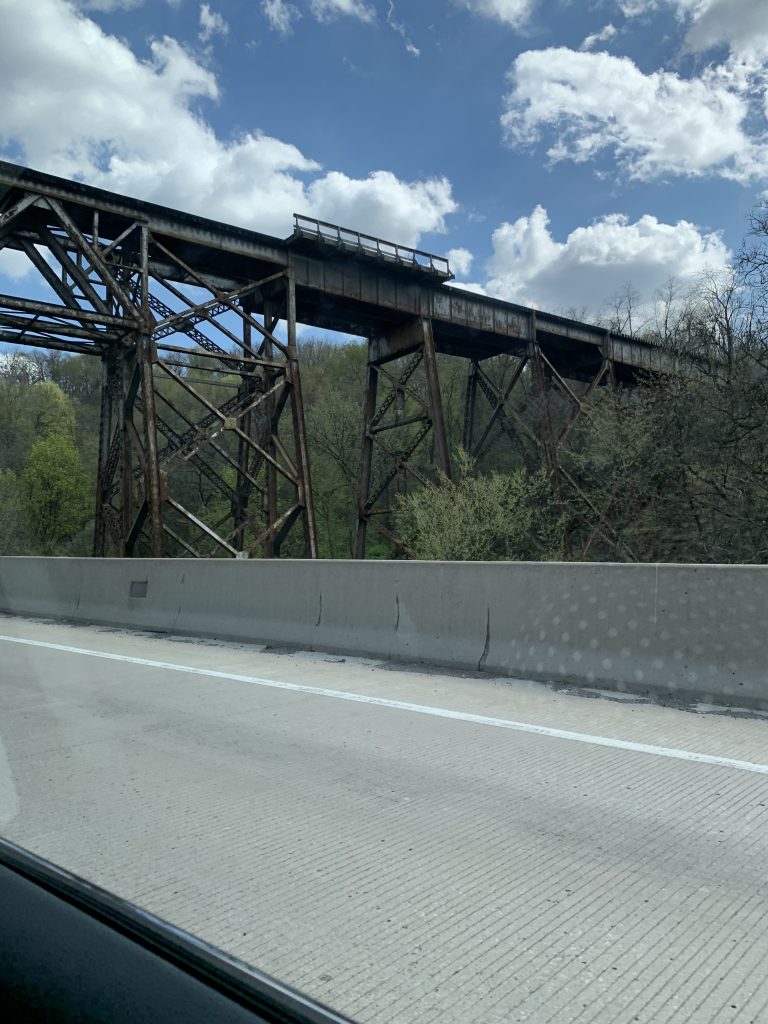
In West of You, I told a story of someone who died in a train “accident.” This was plucked straight out of a story I could not process as a child. A well-known painter drove into a railroad crossing and was killed with his name-sake/grandchild in my hometown. I knew the spot well and when I was told about it as a ten-year-old I could not understand how an accident like that could happen with such good visibility to an oncoming train. He had to have seen it. Did he simply freeze or was there a darker intention?

I still think about it nearly 40 years later.

But I suppose it’s not just writers who get caught up on things we can’t let go. All of us do. We repeat the same stories to our friends. And we do this because these stories had such a profound impact on us that we can’t shake the truth behind them.

For some people, these impressions ruin their lives by leading to a series of bad decisions. For others, they become fuel that fires their worldview. For writers, it hopefully becomes our bread and butter and possibly fuel for some bad decisions along the way and more stories.

What are the themes or objects you keep coming back to in your life? Knowing what they are can help you clear out some of the unnecessary clutter in your mind or better yet…

help you dive deeper into the abyss.